
You finally made it to Tokyo, ready to balance an exciting new culture with your remote work schedule. But after just a few days, the reality of living out of a standard hotel room sets in. Your suitcase takes up half the available floor space, and your only workspace is a narrow, dimly lit shelf facing a wall.
For mid-to-long-term stays, remote professionals need solutions that offer actual living space and productivity, not just a temporary place to sleep. Trying to squeeze your entire life into a tiny room quickly leads to physical discomfort and mental fatigue. You need an environment that supports a sustainable daily routine.
This growing need for space and functionality is shifting how people travel and live abroad. Today, turnkey furnished apartments are rapidly replacing hotels as the go-to accommodation for digital nomads spending a month or more in Japan’s capital.
Why Hotels Fail Long-Term Nomads
Booking an extended hotel stay in Tokyo often sounds convenient until you open the door and see the actual dimensions of your new home. There is a massive space deficit when you compare global accommodation standards to those found in Japan. For context, the average hotel room size in the US is around 28 square meters. This contrasts sharply with standard Japanese business hotels that often range between a claustrophobic 12 to 15 square meters.
Understanding the cultural context helps explain this architectural choice. As Rakuten Travel explains, Japanese business hotels were originally built around salarymen traveling for short work trips, prioritizing efficiency and station proximity over living space, and that original purpose still shapes how compact these rooms are today.
This lack of space creates significant hidden costs for long-term visitors. Without access to a proper workstation, you are forced into working from cafés, cramped desks, or shared spaces that can make it difficult to stay focused throughout the day.
Choosing accommodations designed for longer stays can make it easier to stay productive without sacrificing comfort. Instead of trying to turn a compact hotel room into a workspace, monthly furnished apartments in Tokyo provide a setup better suited for remote work, complete with the space and amenities needed to maintain a consistent routine.
What Exactly is a Turnkey Furnished Apartment?
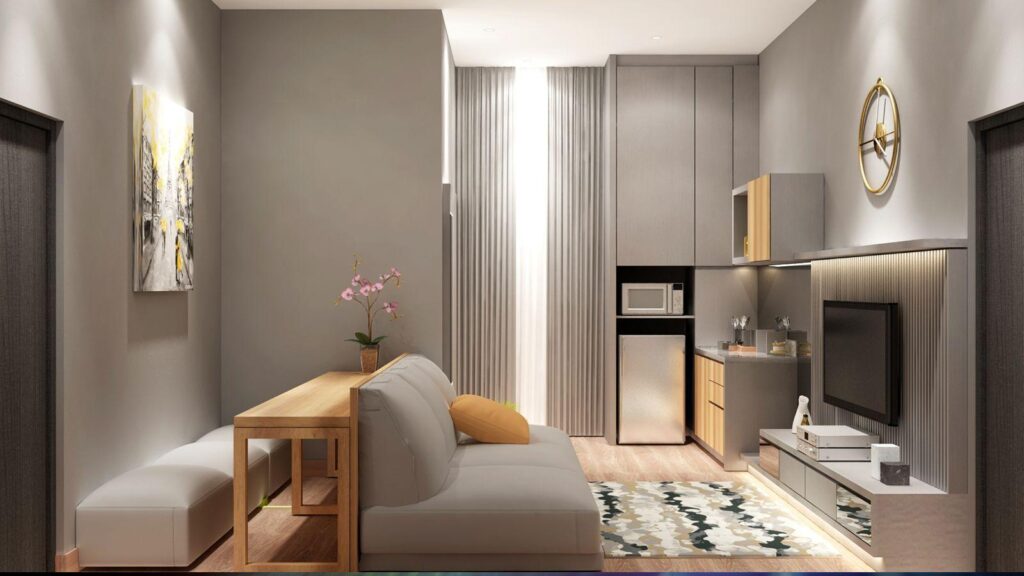
A turnkey furnished apartment is exactly what it sounds like: a living space where you simply turn the key and immediately start your life. These apartments are completely move-in ready on day one. They include thoughtfully furnished living areas, fully stocked kitchens with pots and pans, fresh linens, and pre-arranged, high-speed utilities.
This model offers a “zero stress” approach that entirely bypasses traditional landlords and real estate agents. You can browse properties, verify availability, and book your stay entirely online in English. There is absolutely no need to find a local guarantor, buy a personal seal, or hand over thousands of dollars in reikin.
The biggest advantage for remote workers is the flexibility of month-to-month stays. You have the freedom to extend your trip if you fall in love with the city, or pack up and leave without being locked into a strict multi-year agreement. You maintain total control over your travel schedule.
As a bonus, these apartments are usually situated in highly walkable, transit-friendly neighborhoods. Staying in strategic areas like Shibuya, Ebisu, or Yotsuya allows you to immerse yourself in the local lifestyle instantly. You get the comfort of a real home with the locational benefits of a premium hotel.
Remote Work Productivity: Ditching the Hotel Bed
Trying to run a business or manage a remote team from a standard hotel room takes a serious physical and mental toll over time. Hunched over a tiny, non-ergonomic coffee table or trying to balance a laptop on your knees in bed is a fast track to back pain. It also blurs the lines between your resting space and your workspace, making it incredibly difficult to mentally unplug at the end of the day.
A true remote workspace requires very specific components to keep you healthy and focused. You need an ergonomic chair that supports your posture through long meetings, a height-adjustable standing desk to keep your energy up, and private, high-speed WiFi that does not drop out during critical video calls. These are baseline requirements for the modern professional, not luxury add-ons.
Turnkey apartments cater specifically to these professional needs by offering built-in, high-spec technology. Many setups include ultrawide external monitors, high-definition webcams, professional key lights, and even green screens. This level of equipment allows you to step off a long flight, drop your bags, and immediately jump into a productive workday without missing a beat.
This reinforces a core philosophy of modern nomadism. You should never have to compromise your career just because you are traveling. When you choose the right accommodation, you never have to work from a kitchen table or a hotel bed again.
Cost-to-Value Comparison: Accommodations for 30+ Days
When planning an extended stay, looking solely at the nightly rate of a room rarely tells the whole financial story. You must compare the predictable, flat monthly rate of a turnkey apartment against the rapidly fluctuating costs of hotel living. Hotel rates constantly spike during weekends, local holidays, and peak tourist seasons, making it nearly impossible to budget accurately for a multi-month trip.
Food expenses also play a massive role in your overall cost of living. Having access to a fully stocked private kitchen drastically reduces your daily spending, as you can easily prepare your own breakfasts and dinners. Cooking your own meals also supports a much healthier lifestyle, freeing you from the high sodium and limited vegetable options common in cheap convenience store food.
To clearly see the difference, it helps to look at a direct analytical comparison of your primary housing options in Japan.
|
Accommodation Type |
Setup Time |
Upfront Costs |
Workspace Quality |
|
Standard Hotels |
Instant |
Low (pay per night) |
Poor (tiny desks, shared WiFi) |
|
Traditional Rentals |
2 to 4 weeks |
Extreme (3-6 months rent upfront) |
Varies (requires buying your own furniture) |
|
Turnkey Apartments |
Instant |
Moderate (flat monthly rate) |
Excellent (ergonomic setups, private WiFi) |
When factoring in total living space, personal health, and your daily remote work output, turnkey apartments clearly offer the highest overall value. They bridge the gap between temporary travel and permanent living perfectly.
Conclusion
Thriving in Tokyo for a month or more requires a living situation that actively prioritizes your personal comfort, your budget, and your professional routine. Trying to force a long-term lifestyle into a space built for short-term tourism is a recipe for frustration.
Turnkey furnished apartments effectively eliminate both the claustrophobia of standard hotel rooms and the complex red tape of traditional Japanese real estate. They provide a seamless transition into city life, allowing you to bypass rigid leases and hidden fees entirely. You gain back your time, your money, and your peace of mind.