
FreeWorlder helps travelers discover ethical, adventure-driven trips without money exchange. This guide explains how to browse adventure travel ideas on FreeWorlder quickly and reliably. It shows where to start, which categories matter, how to combine filters, and how to evaluate hosts so a traveler can move from idea to plan in a few focused steps. The instructions assume the reader wants sustainable, skills-exchange stays, common on FreeWorlder, and aims to find trips that match interests, dates, and comfort levels fast.
Key Takeaways
- FreeWorlder is ideal for finding ethical adventure travel ideas through experience and skills exchange instead of monetary transactions.
- Start browsing by exploring the Adventure Travel section, using categories and destination pages to quickly identify trips that match your interests and comfort level.
- Use precise search queries combined with filters like dates and experience level to narrow down adventure travel ideas effectively on FreeWorlder.
- Evaluate potential hosts by reviewing profiles, recent comments, and directly asking specific logistical questions to ensure a good fit.
- Save multiple trip options to compare physical demands and ratings, and engage with the FreeWorlder community forums for insider tips and realistic expectations.
- Confirm visa, permit requirements, and prepare a minimal packing list including essentials like footwear and first-aid once you select your adventure travel plan on FreeWorlder.
Why Use FreeWorlder For Adventure Travel Ideas?
FreeWorlder connects travelers to hosts who trade experiences and skills instead of money, making it ideal for authentic adventure travel. Stat: the platform emphasizes sustainability and cultural exchange, so users often find remote hikes, ecological projects, and homestays that larger booking sites omit.
Practical insight: a traveler seeking a multi-day trek in Patagonia will likely find a local host offering gear advice and route guidance in exchange for teaching English or basic maintenance, this swaps fee-for-service for mutual benefit. FreeWorlder surfaces niche offerings like island conservation stints or community-led canyon treks that mainstream operators rarely advertise.
Concrete warning: experiences vary widely in prep and physical demand. Profiles may list limited facilities (no hot water, tents only), the traveler should expect honest, low‑comfort experiences more often than luxury packages. For background reading on planning and destinations, the platform’s pillar overview guides contextualize choices and logistics, such as in the site overview that frames trip planning and destination selection.
Navigate FreeWorlder’s Adventure Categories And Destination Pages
Start in the Adventure Travel section to see curated trip ideas and region-specific pages. Fact first: the Adventure category groups content by trip type (hiking, eco‑volunteering, RV travel) and by region (Amazon, Galápagos, Antarctica), so it shortens discovery time.
How to act: open the Adventure Travel hub and scan tags on the right-hand column for “outdoor,” “sustainable,” or “multi-day.” Destination pages include sensory details, trail length, average temperatures, and common wildlife sightings, helping travelers visualize a day on the route before contacting a host.
Example: a reader who loves coastal kayaking can jump to a destination page that lists beaches, launch points, and local tides, then use nearby host profiles to confirm launch access. For logistical prep and budgeting after picking destinations, the reader can consult the practical budgeting guide on the site for packing and cost estimates via the budgeting guide.
Caveat: category copy and destination posts are author-written: check host reviews and dates carefully because seasonal access changes (wet season closures, migration windows) affect feasibility.
Search, Filters, And Tags To Pinpoint Trips
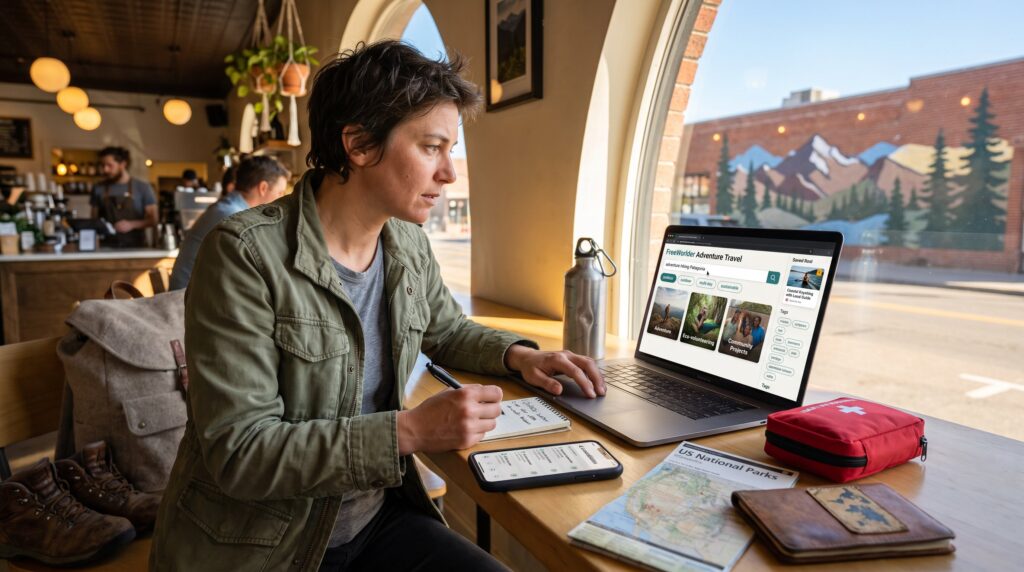
Answer first: the search bar plus targeted filters lets travelers narrow thousands of listings to a manageable set in minutes. FreeWorlder’s search supports location, interest, and date queries, producing host matches and articles that fit the query.
Immediate steps: type a concise query like “adventure hiking Patagonia,” then apply filters for dates and experience level. Tags, short labels attached to each post, help isolate specifics such as “guided,” “self-guided,” or “family‑friendly.”
Example scenario: a traveler enters “volunteer reef restoration,” restricts dates to June–July, and applies the “eco” interest filter. The platform returns hosts who explicitly list reef work, supplies needed, and expected physical exertion.
Practical note: when search returns too many results, use the sorting menu (most recent, highest-rated, nearest) to prioritize. FreeWorlder search also surfaces destination articles and local guides alongside host listings so the traveler can read context before messaging.
Links to related site resources are helpful now: for a quick orientation to destination content, consult the page describing where to find regional guides at destination guides.
Evaluate, Save, Plan, And Use Community Features To Finalize Your Choice
Immediate guidance: evaluate host fit by first reading the profile, recent comments, and listed expectations, then message with three specific questions about logistics. Profiles typically list sleeping arrangements, work expectations (hours per day), and any costs (transport, permits).
Actionable checklist:
- Confirm exact dates and arrival instructions.
- Ask about equipment provided versus what the traveler must bring.
- Request recent photos or GPS coordinates for remote trailheads.
Saving and planning: use FreeWorlder’s save/bookmark tool to collect 4–6 candidates, then compare side-by-side on criteria like physical demand and host ratings. For itinerary assembly and budgeting, cross-reference the saved hosts with the site’s planning resources, including the overseas adventure prep guide at overseas prep.
Community features: join forum threads to ask former volunteers about realistic day rhythms, someone might report that a “five-hour workday” consistently stretched to seven. That kind of firsthand nuance prevents unhappy surprises.
Honest moment: hosts may unintentionally understate difficulty. A traveler shared that a “light hike” included a 700‑meter ascent: after that lesson they now always ask for elevation change and typical day itineraries before booking.
Final practical tip: once a host match is chosen, confirm any visa or permit needs and create a minimal packing checklist that specifies footwear, refillable water system, and a basic first‑aid kit.
Conclusion
FreeWorlder streamlines idea-to-plan for ethical adventure travel when travelers use the Adventure category, targeted search, and layered filters, then evaluate hosts with focused questions. The real savings are experience quality and cultural immersion, if the traveler prepares for honest conditions and confirms logistics, FreeWorlder yields rich, low-cost adventure opportunities.