

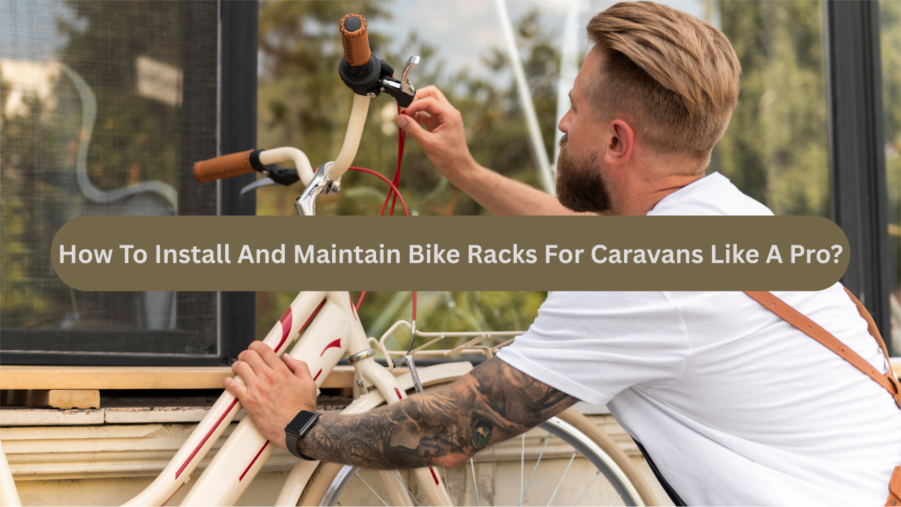
Have you found yourself in the hassle of transporting your bikes on a caravan trip, only to have so much trouble with the racks, the heavy pulling, and the safety concerns one has while driving?
Many caravan owners face the same problems: racks that don’t fit, bikes that move during the trip, or complex, time-consuming setups.
To make it even worse, you worry about messing up your caravan or your bikes when loading or unloading, which you should not concern yourself with.
The upside of it is that, with the proper attitude, you can make this activity an easy and trustworthy habit.
In this article, we are going to show you how to fit and care for a bike rack on your caravan step by step, like a professional, so you can be sure it is safe, convenient, and easy to handle.
1. Pick Ideal Rack Location
For a comfortable biking trip, choosing the optimal caravan bike rack is the first step.
Think about where it will be fixed: the drawbar or the A-frame of your caravan is usually the safest and most secure option. This positioning helps distribute weight appropriately and ensures the back of the caravan is free to trail behind.
Moreover, make sure that the rack is compatible with your bikes and with the required weight load.
Ensure that there is adequate room for the gas bottles, toolboxes, or other accessories attached to the A-frame. Selecting the appropriate location enhances safety and facilitates loading and unloading.
2. Measure Weight and Stability
It is essential to know the weight limit of your caravan’s tow balls before installation.
A bike with a rack will shift the caravan’s weight to the front or back, potentially leading to loss of control and stability. So, measure the weight of your bikes, the rack and accessories carefully. Heavy bikes should be placed nearest to the caravan to balance the caravan.
Do not overload the rack, as this may damage the mounting spots or even compromise the safety of your caravan while driving.
Correct weight distribution maintains a smoother towing and lessens the wear on both your caravan and your vehicles.
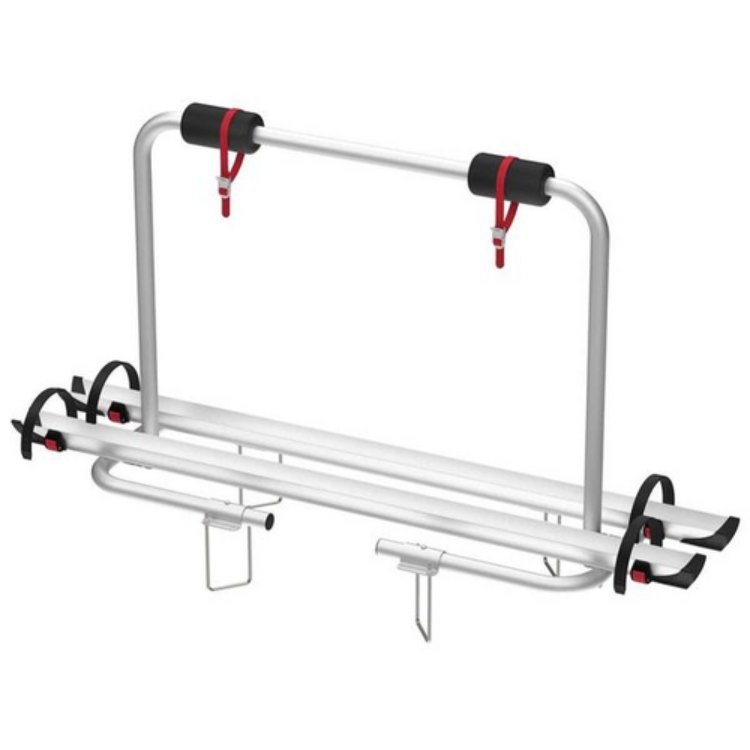
3. Fasten Rack Securely
After selecting the appropriate positioning, you must mount the rack securely. Heavy, corrosion-resistant bolts and brackets must be utilised to ensure durability.
Loose fittings may cause rattling, movement or even detachment during transportation. The manufacturer’s instructional manual should be followed, and every bolt must be checked after tightening.
The quality of the hardware will ensure a stable environment and fewer maintenance problems in the future.
Also, another thing to keep in mind is applying anti-seize lubricant to the bolts to prevent rusting, particularly when you have to move around near coastal regions.
4. Confirm Clearance Around Caravan
Then ensure that your rack and bikes do not conflict with the other parts of the caravan.
Make sure that the space between gas bottles, toolboxes and stone guards is sufficiently large.
During transport, bikes should not come into contact with the caravan walls or any other accessories, as they may scratch or be damaged.
For tight clearance, seek racks with adjustable height or a tilting feature. Correct clearance will maintain safety and ease of use, and will help prevent long-term damage to your caravan and bicycles.
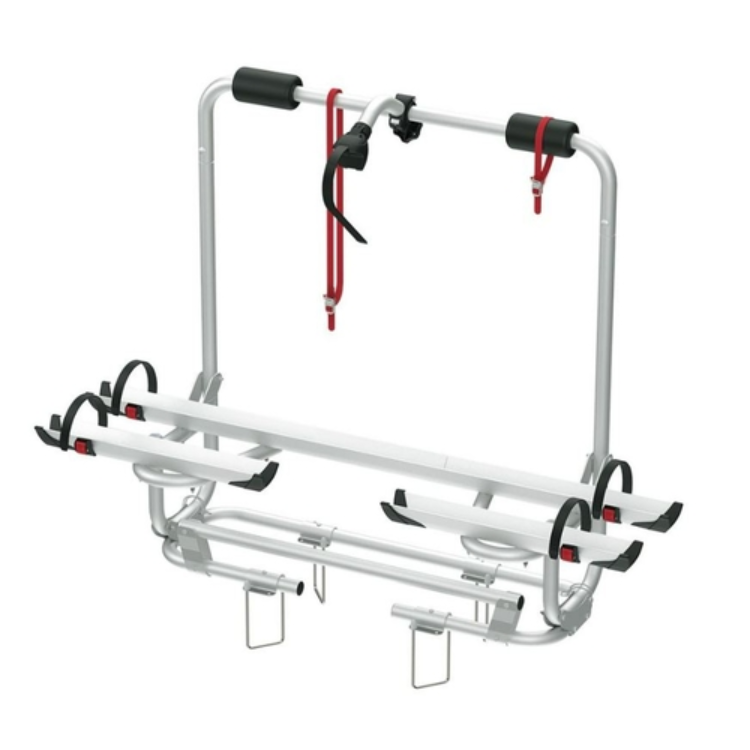
5. Streamline Bike Placement
The most impressive racks can be irritating when loading and unloading is inconvenient.
Before you hit the road, you have to practice placing your bikes on the rack. For heavy bikes or e-bikes, a tilting or lift-assist rack should be considered to reduce strain on the rider.
Use straps or clamps to secure each bike so it does not move during transportation. You can also save on energy and prevent frustration during long trips by doing it beforehand.
A hassle-free loading process also helps to reduce the chances of dropping or breaking your bikes.
6. Examine Rack Condition
After installation, you should maintain your bike rack. Periodically examine bolts, brackets, and the frame to determine whether they are worn, corroded, or loose.
Check the clamps and straps to ensure they are in place and working correctly. This should be a habit, particularly after a long trip or over bumpy roads.
An early inspection would help avoid minor problems from becoming major ones and ensure your rack is safe and reliable.
7. Clean Rack and Bikes
After trips, it is a good idea to clean your bikes and the rack to help them last longer. Both the rack and the bikes may become corroded due to dirt, mud and road salt that accumulate on them.
Wash surfaces with mild soap and water, then dry them thoroughly before storing. Apply lubricants to joints with movement, like clamps, to keep them loose or rust-free.
Regular cleaning not only maintains your setup in good condition but also ensures it operates smoothly whenever you travel.
8. Store Rack Safely
Lastly, please do not leave the rack outside, as it may get spoiled by the elements. Therefore, do not store it outside where there are many people.
Where feasible, take off the rack in the caravan to limit the needless exposure to the sun, rain, and dust.
Corrosion is prevented by proper storage, ensuring moving parts move smoothly, and the rack, as well as your bikes, have a longer lifespan.
It should be noted that a protective case is also worth considering to add additional protection, particularly when you live in an area with severe weather conditions.
Conclusion
It does not always have to be a complicated, demanding process to install and maintain a bike rack on your caravan.
With a well-thought-out selection of the right rack, proper weight distribution, high-quality hardware, and regular maintenance procedures, it is possible to make the process of transporting bikes safe, effective, and enjoyable.
Every action, such as choosing where to mount your bike, washing it, and putting it away, is crucial to maintaining your bike’s safety and your caravan’s perfect condition.
By adhering to such pragmatic advice, you will turn an otherwise frustrating experience into a smoothly run professional one, enabling you to focus on the fun of your cycling trips every time you drive the caravan.