


There is a particular kind of satisfaction in being right about something everyone else laughed at. Ask the man who bought a tidy Triumph Stag for £4,500 in 2018 and watched it climb past £14,000 without so much as a change of tyres. British Leyland — that magnificent, chaotic, strike-riddled monument to everything simultaneously brilliant and broken about 1970s Britain — has spent decades being the punchline. Now, rather abruptly, it is becoming the investment.
From Industrial Punchline to Paddock Find: The Reputation Problem BL Never Deserved
British Leyland’s story is genuinely one of the most dramatic in automotive history. Born from the 1968 merger of British Motor Holdings and Leyland Motors, it briefly became the fifth-largest car manufacturer on the planet. Within a decade, it was a byword for poor build quality, wildcat strikes, and cars that seemed to dissolve at the first sight of a British winter.
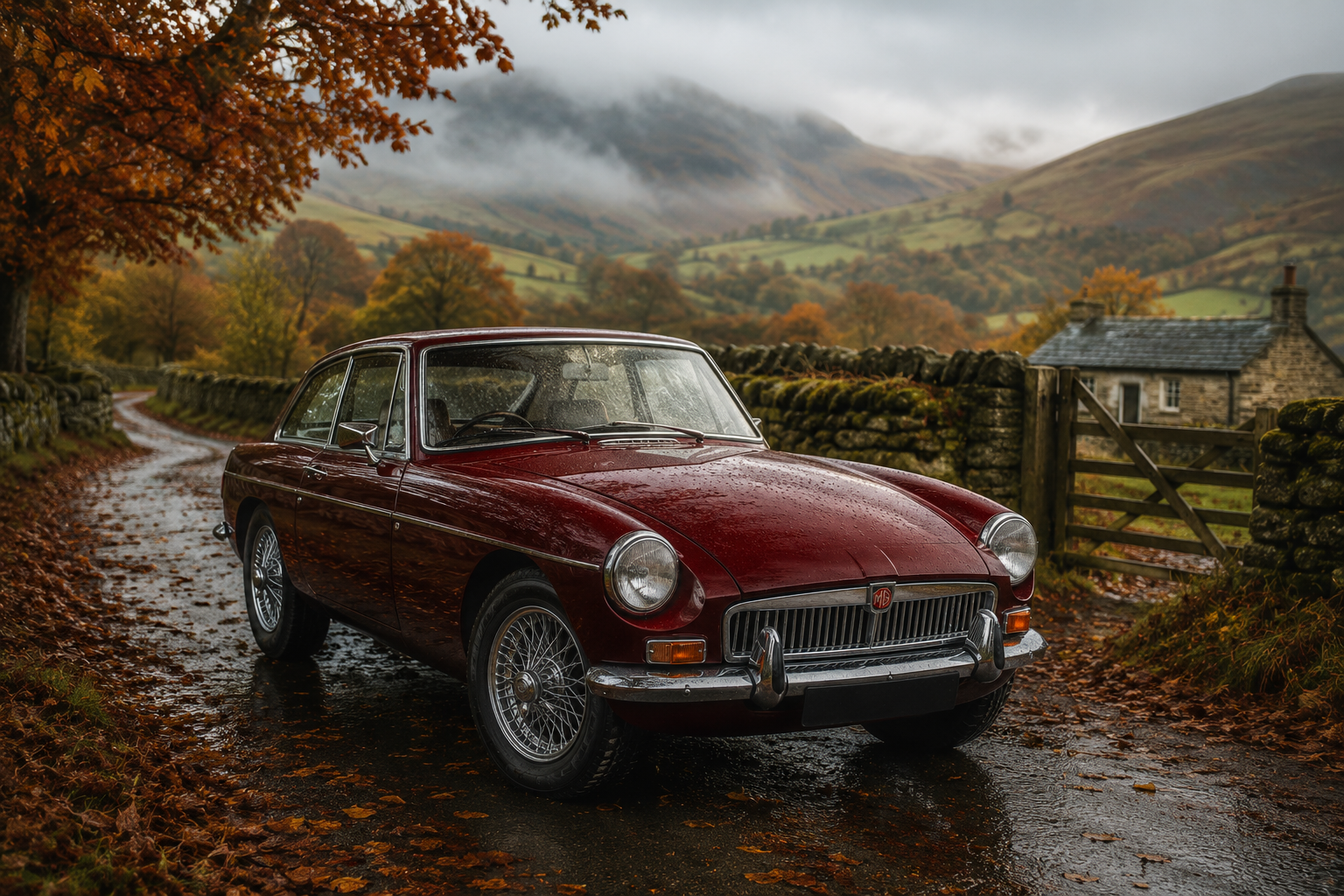
But here is the thing the consensus always got wrong: beneath the managerial dysfunction and the brown interior trim, BL produced some genuinely interesting, often beautiful machines. The MGB had been a proper sports car since 1962 and continued selling in huge numbers well into the late seventies. The Triumph Stag, for all its reputation for overheating, is a genuinely handsome V8 drop-top that would turn heads anywhere in Europe. Even the wedge-shaped Princess — designed by Harris Mann and looking like something from a science fiction film — has a character that no contemporary family saloon can match.
The market suppressed these cars for years simply because the stories about them were louder than the reality. That suppression, as any collector knows, is precisely where value hides.
The Numbers That Are Changing Conversations at Classic Car Shows
The data from specialist auction houses tells a consistent story. According to figures tracked by Historic Automobile Group International and corroborated by results at Silverstone Auctions and H&H Classics, well-presented British Leyland classic cars investment value has shifted dramatically since 2019. A chrome-bumper MGB roadster in good condition that might have fetched £7,000–£8,000 five years ago is now regularly clearing £16,000–£18,000. Rubber-bumper cars, long considered the poor relation, have followed.
The Triumph Stag has been even more striking. Top-condition, professionally restored examples have touched £28,000 — territory that would have seemed absurd a decade ago. Even the unloved Allegro, possibly the most mocked car in British motoring history, has found a small but devoted following prepared to pay three times what a tidy example cost in 2017.
What is driving this? Several forces, operating simultaneously.
- Generational nostalgia reaching peak spending power. The children who grew up riding in the back of a Maxi or a Marina are now in their mid-forties to early sixties, with disposable income and a desire to reconnect with something viscerally familiar.
- Scarcity accelerating faster than expected. Rust, neglect, and parts-car attrition have removed thousands of survivors from the pool. The cars that remain are genuinely finite.
- The German alternative has priced itself out. Air-cooled Porsches and classic Mercedes-Benz models have become inaccessible to most buyers, redirecting attention — and money — toward British alternatives.
- Club infrastructure has matured. The MG Car Club, the Triumph Stag Owners Club, and the Rover P6 Club have spent decades building parts networks and technical knowledge. Owning one of these cars is genuinely manageable now in a way it simply was not twenty years ago.
- Media rehabilitation. A sustained wave of sympathetic coverage — from magazine features to YouTube restoration channels — has reframed these cars as misunderstood rather than merely bad.
Which Models Still Represent Genuine Opportunity in 2024
Not every BL model is a sound proposition. The Allegro remains a niche taste, and finding a structurally solid one requires patience that most people cannot sustain. But several cars represent what specialists quietly refer to as “the gap” — appreciating faster than the market has fully priced in.
The Rover SD1 is perhaps the most compelling current case. A genuinely stylish, Italianate saloon with a Buick-derived V8, it won European Car of the Year in 1977 and was then largely abandoned by its maker. Well-sorted Vitesse models are still finding buyers at £8,000–£12,000 — probably a third of what they will be worth in ten years.
The Triumph TR7 and TR8 have also shifted. The TR7 still divides opinion on its styling, but the V8-powered TR8 — only around 2,500 were officially imported to the UK — is now a genuine collector’s piece with prices moving firmly upward.
The Princess and its successor, the Ambassador, remain undervalued almost purely because of residual mockery. Harris Mann’s hydragas-suspended wedge is historically significant, surprisingly comfortable, and cheap enough that even a poorly-judged purchase is rarely catastrophic.
The Ownership Experience: What Nobody Warns You About (In a Good Way)
There is something the investment conversation tends to obscure: these cars are genuinely enjoyable to own and drive. The MGB, stripped of modern driving aids, requires and rewards actual engagement — your hands on a wooden-rimmed wheel, your feet doing real work, your eyes reading the road rather than a screen. It is an experience that feels increasingly rare.
The Triumph Stag, when properly maintained (and the overheating issue is entirely solvable with a correct thermostat and coolant system refresh), is a genuinely charismatic touring car. It sounds extraordinary. It draws attention at every petrol station. On a warm evening on a B-road in the Cotswolds, there are very few better places to be.
Many owners choose to personalise their cars subtly — period-correct number plates being among the most popular finishing touches, with specialists like Plates Express offering show plates and display plates that suit the aesthetic of classic British cars without compromising their character.
The community around these cars matters too. BL marque clubs are among the most active and technically generous in British classic motoring. Whether you need a correct-specification carburettor needle for a 1977 MGB or advice on sourcing original Ambla interior cloth for a Princess, someone in the club already knows the answer.
What to Look For — and What to Walk Away From
Buying wisely matters as much as buying at all. The appreciation story is real, but a badly-bought example — one with a rotten sill structure, a bodged engine or a fraudulent history — will cost more to sort than the eventual gain.
For MGBs, the key areas are the sills, the floors, the A-post bottoms, and the condition of the Heritage or original bodyshell. Chrome-bumper cars command a premium and rightly so, but a rubber-bumper car that has been properly converted back to chrome specification using genuine parts is an entirely legitimate alternative. Pay for an independent inspection. The MGOC and affiliated clubs can recommend inspectors who know these cars forensically.
For the Stag, insist on documented evidence that the cooling system has been properly addressed — not patched, properly addressed. Check the camshaft timing, the cylinder head condition, and look for any evidence of previous overheating damage. A car with a full, traceable service history will be worth meaningfully more at the point of sale than a similar car without one.
For the Rover SD1, the tailgate corners, the inner wings, and the condition of the rear subframe mounts are the structural concerns. The V8 engine itself is famously durable if it has been maintained with clean oil and a functioning cooling system. Electrical gremlins are common but rarely serious — budget for a thorough rewire if the loom looks original and tired.
The Bigger Picture: Why This Moment Will Not Last Indefinitely
The window for buying British Leyland cars at prices that still feel reasonable is narrowing. It has not closed — not yet — but the trajectory is unambiguous. As global supply of unrestored survivors continues to shrink, as restoration costs rise with skilled labour rates, and as the demographic of nostalgic buyers continues to grow, the arithmetic only moves in one direction.
None of this means treating a classic car purely as an asset. The best reason to own one remains that driving it — on a proper road, at a pace that actually uses the gearbox — is one of the more honest pleasures available to anyone who cares about cars. The appreciation is a welcome consequence, not the point.
British Leyland got a great deal wrong. But the cars it produced, at its best, got something deeply right — something about proportion, character, and the sense that a machine ought to feel like it was made by human beings rather than assembled by algorithm. The market, slowly and belatedly, is arriving at the same conclusion.